

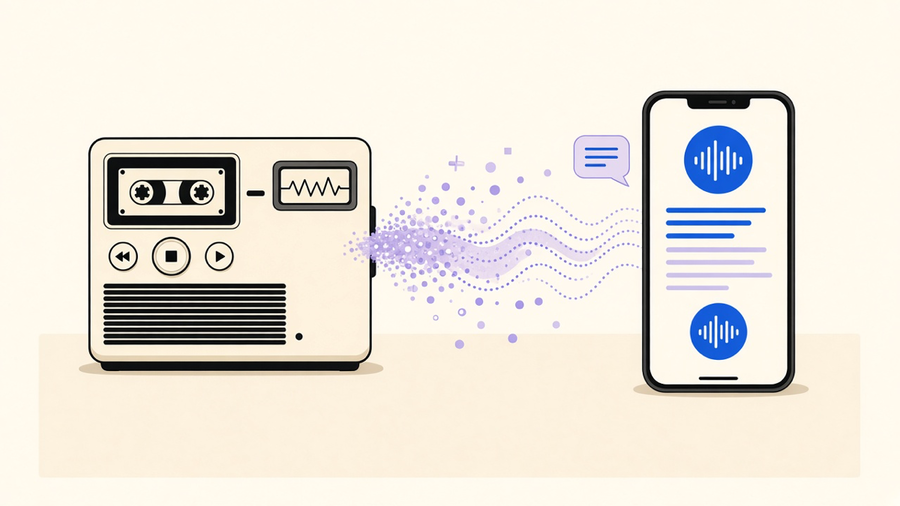
An AI answering machine is a voicemail box that got a brain: instead of playing a recorded greeting and hoping the caller leaves a usable message, it holds a short real conversation, figures out why the person called, and sends you a transcript and a text the moment the call ends. It is not the same thing as a full AI answering service, which books appointments and routes live calls. An answering machine’s job is narrower and cheaper: catch what you would have missed anyway, and hand it to you in a form you can act on in ten seconds instead of a garbled voicemail you have to replay twice.
That distinction gets blurred constantly in vendor marketing, and it is worth separating cleanly before you shop, because the two products solve different problems for different budgets.
What Changed From a Voicemail Box to an AI Answering Machine
A voicemail greeting has always done exactly one thing: record whatever the caller says and store it as an audio file. You get a name if they remember to give one, a callback number if they say it slowly enough, and a vague sense of urgency you have to guess at. Nothing about that workflow has improved since answering machines had cassette tapes in them.
An AI answering machine keeps the same job (catch the call you couldn’t take) but changes everything downstream. Aircall’s rundown of AI phone answering describes the shift as moving from a passive recording box to a system that actually listens: it asks a clarifying question if the caller mumbles the reason for the call, transcribes the conversation in real time, and pushes a summary to your phone or inbox before you have even finished your coffee. OnceHub’s research on automated call handling puts a number on why that matters: small and mid-sized businesses miss an estimated 25 to 60 percent of inbound calls depending on staffing and after-hours coverage, and 85 percent of callers whose calls go unanswered will not call back. A machine that turns a missed call into a readable, actionable message recovers a chunk of that loss without anyone picking up the phone.
None of that requires the machine to book anything, transfer anything, or check a calendar. That is the whole point of calling it a machine and not a receptionist.
How an AI Answering Machine Actually Works
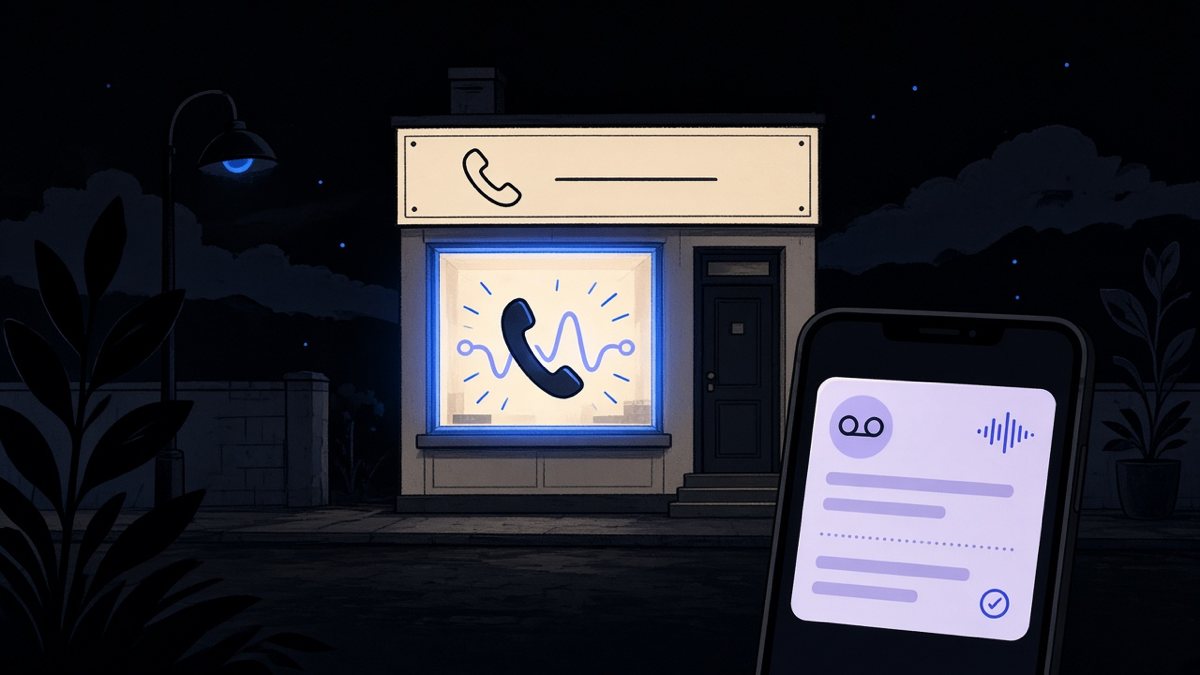
The call flow is short on purpose. A call comes in and goes unanswered, either because it is after hours, every line is busy, or nobody is at the desk. The AI answers on the next ring, plays a natural-sounding greeting instead of a script, and asks what the caller needs. It listens for intent (a callback request, a question about hours, a complaint, an order status check) and captures whatever details the caller gives without forcing them through a phone tree. When the call ends, it generates a written summary and a full transcript, then pushes both to whoever is supposed to see them, usually by text or email, sometimes into a shared inbox or CRM note.
That is where most machine-tier products stop. They do not check your calendar. They do not transfer a call to a live person mid-conversation, because there is no live person on standby to transfer to. If the caller needs something more complex than “leave a detailed message,” a machine either takes the message anyway or tells them a callback is coming. Compare that to the “virtual receptionist” or full answering service category, which handles routing, live transfers, and booking as core features rather than as an upsell. Buyers who confuse the two end up disappointed either way: paying receptionist prices for machine-level features, or expecting a $20-a-month machine tier to route a call to the on-call plumber at 2am.
Speech recognition accuracy in commercial voice AI deployments now clears 95 percent by most published benchmarks, which is good enough that the transcript reads like something a person typed, not the auto-caption gibberish from a decade ago. That accuracy is doing the actual work here. A machine-tier product with sloppy transcription is worse than a plain voicemail, because you now have to decide whether to trust a garbled summary or dig up the audio anyway.
Who Should Buy the Machine Tier, Not the Full Service
The AI answering machine tier fits a specific buyer: a solo operator, a small trades business, or a team that mostly needs missed calls captured, not calls actively managed. A one-person consulting practice that is in meetings all day does not need a system that books appointments onto a live calendar. It needs every missed call to show up as a text with a name, number, and a one-line reason, so a callback happens within the hour instead of whenever someone gets around to checking voicemail. A retail store that closes at 6pm does not need after-hours call routing. It needs after-hours calls captured and sorted so the morning shift knows which ones are urgent.
Where the machine tier runs out of road is complexity. If a caller needs to reschedule something, check real-time availability, or get routed to a specific department based on what they said, a machine that can only take a message forces a second interaction that a full answering service would have closed on the first call. Most customers only end up using a fraction of whatever platform they buy, so there is no upside in paying receptionist prices for features a small operation will never touch. The honest move is matching the tier to the call type you actually get, not the one the sales page assumes you get.
That is a call worth making with real numbers, not guesses, which is where a lot of teams get it wrong. We have built exactly this kind of triage layer for an operator who needed after-hours phone coverage without hiring a night shift: a system that answered, captured, and routed the calls that mattered while leaving the rest as a clean summary for the morning, wired through the business’s own APIs so nothing lived in a separate silo from the rest of their operations.
AI Phone Answering vs. AI Call Answering vs. a Machine
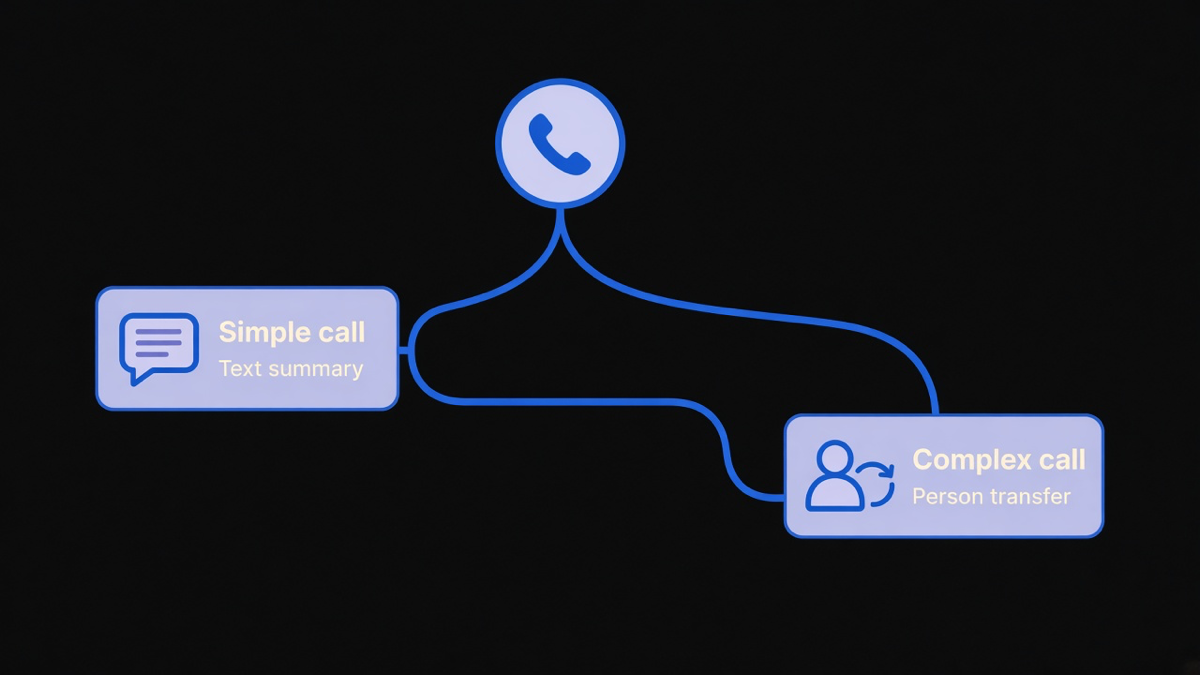
“AI phone answering” and “AI call answering” are the two most common search phrases for this whole category, and they describe the umbrella, not a specific tier. Under that umbrella sit at least three distinct products: the answering machine (capture and summarize), the virtual receptionist (capture, route, and hold a longer conversation), and the full AI phone system (all of that plus outbound calling, analytics, and integration with the rest of a business’s call infrastructure). Vendors blur these lines constantly, because “AI answering machine” undersells a product that also does routing, and “full AI answering service” oversells one that only takes messages.
The fix is asking one direct question before comparing price: does this call need a person on the line, or does it need a good message left with a human? If most of your inbound calls are simple (hours, location, “are you open,” a callback request) the machine tier is not a compromise, it is the correct tool. If your calls carry real decisions (booking, complex intake, an angry customer who needs de-escalation now) you need the routing and live-handling features that push you into virtual receptionist or full answering service territory, and you should budget for that instead of stretching a machine tier past what it is built to do.
I would rather see a small business run a clean machine-tier setup and know its limits than overbuy a full platform it uses at a fraction of capacity. The cost of underbuying is a missed call handled a few hours later than ideal. The cost of overbuying is a monthly bill for routing and booking logic nobody configured. For most solo and small-team operators, that tradeoff favors starting cheap and specific, then upgrading to an AI receptionist for small business setup only once call volume or complexity actually demands it. When a business does reach that point, having AI that answers the phone built into the rest of its systems, not bolted on as a separate app, is what keeps the upgrade from becoming its own integration project six months later.