

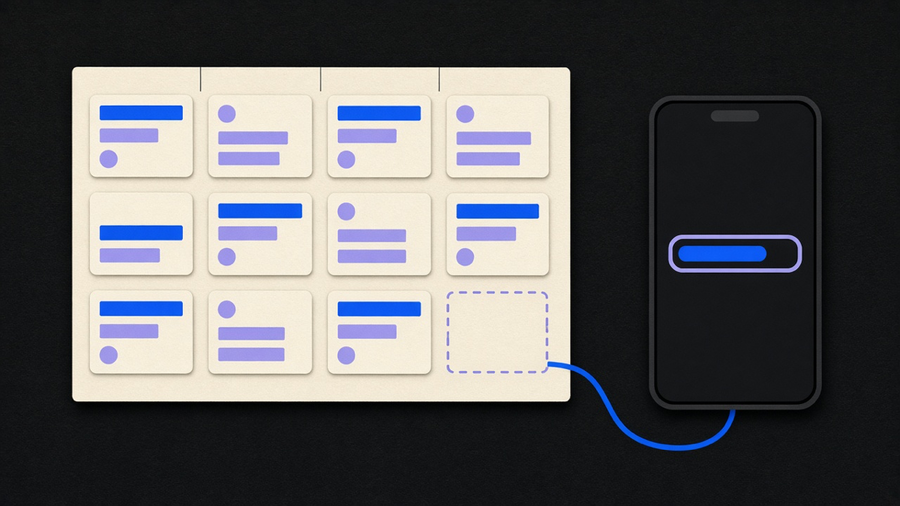
Agile mobile app development means delivering the app in fixed-length cycles, usually a month or less, where a Product Owner orders the backlog and the team inspects a working slice at the end of every cycle instead of waiting for one big launch. That is the Scrum Guide’s own definition of a Sprint, and it is the part most vendor explainer pages skip past on their way to a sprint-board screenshot. The harder part, the part that actually determines your release date, is that a Scrum Increment and a public app store release are not the same event. One happens on your team’s clock. The other happens on Apple’s and Google’s.
What agile actually means for a mobile build
The Agile Manifesto’s own principles are narrower than most pitch decks imply: deliver working software frequently, from a couple of weeks to a couple of months, preferring the shorter interval, and have business people and developers work together daily. Scrum is one implementation of that, not a synonym for it. The Scrum Guide calls it an empirical framework: a cross-functional team, typically ten people or fewer, turns backlog items into a usable Increment during a Sprint, then inspects and adapts. “Usable” is load-bearing there. Scrum is explicit that work does not count as part of an Increment, and cannot be shown at Review or released, unless it meets the team’s own Definition of Done. A coded screen that has not cleared your own quality bar is not a Sprint result. It is unfinished work with a demo attached.
That bar does not shrink because the codebase is shared. React Native app development still maps a View to an Android ViewGroup and an iOS UIView under the hood, so an iterative team working one user-facing story still owns Android-specific and iOS-specific native behavior inside that story, even when the product backlog only shows one line item. That is also the detail most people skip the first time they ask how to make a mobile app and assume feature parity across platforms comes free with a shared codebase. Ranking pages on this topic tend to sell “agile” as the default process for any mobile app development project. The primary sources are more precise: a set of values, one optional framework among several, and a mobile build that still carries store and OS constraints no sprint board removes.
Sprint cadence is not store release cadence
Here is where the generic agile advice runs out. A Scrum Sprint has a fixed length of one month or less, with Planning capped at 8 hours, Daily Scrum at 15 minutes, Review at 4 hours, and Retrospective at 3 hours for a full month-long Sprint, shorter for shorter ones. Atlassian’s own framing is useful here too: Agile is the philosophy, Scrum is one implementation of it, and some Agile teams run continuous flow instead of fixed Sprints at all. None of that touches what happens after you hit submit.
On the android app development side, Google Play’s own support documentation says processing a change can take a few hours, up to seven days, or longer in exceptional cases, and recommends planning at least a one-week buffer between submission and going live. Apple’s process is stricter in a different way: App Store Connect allows one app-version submission under review per platform at a time, and after approval you can choose a 7-day phased release that ramps new users from 1% up to 100% in steps, pausable for up to 30 days. Treat your Sprint Increment and your store release as two tracked timelines, not one. A two-week internal demo that looks done is still a week or more from being in anyone’s hands who isn’t on TestFlight or a Play testing track, and that gap is where “we shipped it” turns into an awkward standup update three days later.
How this differs from a fixed-scope build
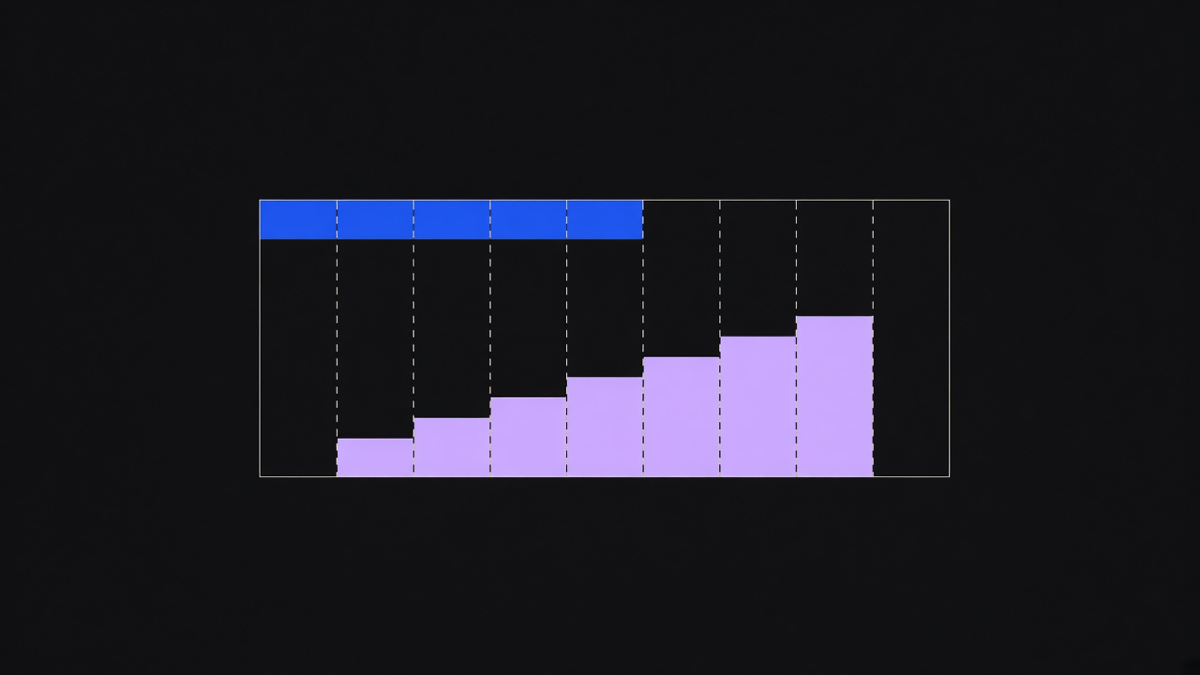
The Manifesto’s values, as UK government contracting guidance quotes them, favor individuals and interactions over processes and tools, working software over documentation, customer collaboration over contract negotiation, and responding to change over following a plan. GOV.UK’s own service manual draws the sharper line: waterfall runs requirements, design, build, and test as distinct phases with one shot at each; iterative delivery runs those same activities concurrently, in cycles, and only goes live once feedback shows the thing meets a real user need. That difference is not cosmetic. It changes who finds out something is wrong, and when.
Platform choice sits inside that same decision, not above it. Native Android and iOS code reaches the platform’s own views directly. A shared cross platform mobile app development codebase, React Native being the common case, drives those same native views through one JavaScript layer instead of two platform-specific ones. That is the real native vs hybrid app question, and it is a process input, not a methodology choice: it changes how many codebases you have to keep inspecting and adapting, not whether you still owe the team a working Increment every cycle. Calling a fixed-price contract with Scrum ceremonies bolted on “Agile” is a hybrid arrangement wearing a framework’s name. Nothing wrong with the hybrid. Just say what it is.
What iterative delivery actually does to scope and cost
Nobody gets a cheaper app by saying the word agile in a kickoff meeting. UK government contracting guidance states the trade-off plainly: if scope is treated as fixed, time and cost absorb the overrun. If time and cost are the fixed points instead, the backlog is what flexes, and some outcomes ship as the variable instead of landing all at once at the end. That is the actual mechanism behind every “agile saves money” claim, and it only holds if someone is actually trading scope, not just running two-week meetings around a fixed spec.
Agency-published figures from Emerge put a typical build at three to six months of design and development, nine to twelve for complex integration work, with an in-house team running roughly $50,000 to $80,000 a month and production-ready builds landing from the mid five figures for something simple to $250,000 and up for the most complex scope. The same source reports 30 to 40 percent cost savings from one shared codebase versus maintaining two separate native ones, with the caveat that community frameworks can fall in and out of favor in a way a platform SDK does not. Those are vendor-observed numbers, not an independent industry survey, and that gap is worth noticing on its own: nobody publishing from inside the work gives you a clean public benchmark, because the honest answer to how much does mobile app development cost depends on which parts of the backlog actually make the cut. A fixed-price “agile” contract that never renegotiates scope when a Sprint runs long is just waterfall with a standup added. If you want the cost control iterative delivery promises, the backlog has to be allowed to move, or the only thing still moving is the invoice.
When agile is the wrong fit for the build
Iterative delivery earns its keep under specific conditions, and GOV.UK names them directly: user needs or solution options that change often, end users who can actually give fast feedback, a problem complex enough that the whole scope isn’t knowable up front, and work that can be sliced into pieces that are each usable on their own. Run the inverse of that list and you get the actual warning signs: no one available to give feedback between cycles, a backlog you cannot slice into anything independently usable, or a procurement process that demands a fully costed specification before anyone writes code. None of those are hypothetical. They show up in regulated builds, hardware-locked features, and contracts where the buyer wants the fixed-price comfort of waterfall and the flexibility marketing of agile at once, a combination nobody actually gets.
Store rules do not bend for either camp. Review queues and staged rollouts apply whether the team ships on a two-week Sprint or a six-month waterfall plan, so that part of the mobile app development process is fixed no matter which side you land on. My read after watching both play out: pick iterative delivery by default for anything with real user-behavior uncertainty, and reserve a sequential, fully-specified plan for the narrow case of hardware-locked builds or contracts where nobody on the client side has standing time to look at a Sprint Review. If that second case describes your project, say so up front and scope accordingly rather than forcing a ceremony onto a team that has no one free to attend it. For teams that want someone who will tell them honestly which of those two they actually are before the contract gets signed, that is what scoped mobile app work looks like done right, not a template pitch deck with “Agile” printed on the cover slide.