

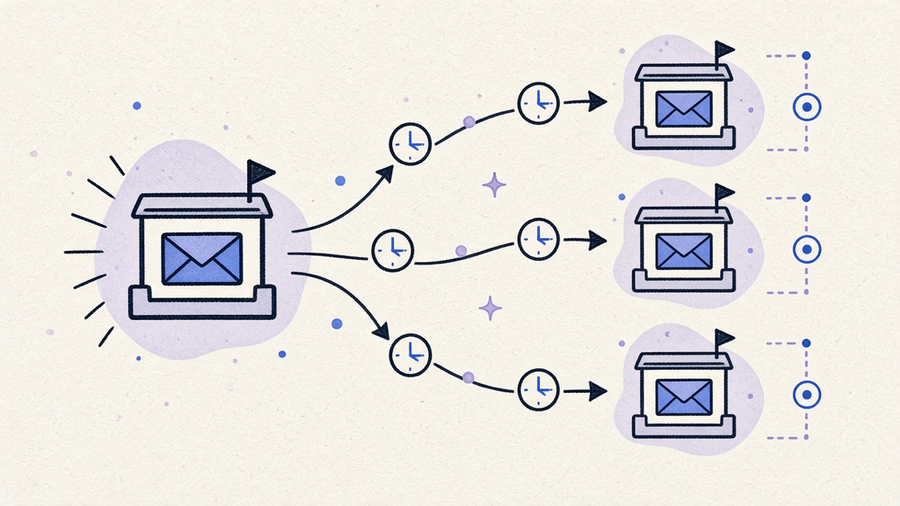
Cold email automation is software that sends a scheduled sequence of emails to people who have never interacted with your company, tracks opens and replies, and stops the sequence the moment someone answers. That is the whole job. It does not write the email, it does not decide who to target, and it will not save a message nobody wanted to read. If you are trying to figure out whether this is worth setting up, start there: the tool moves timing and volume off your plate, not judgment.
Cold Email Meaning vs Cold Outreach
Cold email is one channel inside the broader category of cold outreach, which also includes cold calls, LinkedIn messages, and direct mail. The distinguishing feature of a cold email is that the recipient has no prior relationship with the sender and did not request contact, which is why deliverability and framing matter more here than in any warm channel. Cold outreach as a strategy assumes you are starting from zero trust and building it inside a handful of sentences, so every line has to earn the next one.
The confusion most people run into is treating cold email like a mass blast. It isn’t, or at least it shouldn’t be. Close’s own breakdown of cold email tools frames the category as automating a targeted, one-to-one style message at scale, not spraying a list. A cold email that reads like a newsletter gets deleted at the subject line. A cold email that reads like a person noticed something specific about the recipient’s company gets fifteen seconds of attention, which is all you need to make a case.
Does Cold Email Still Work
Yes, with a caveat: it works when the list, the message, and the follow-up cadence are all correct, and it fails hard when only one of those three is off. The evidence for “yes” is not hypothetical. Smartlead’s published case studies show a recruiting founder hitting 35% positive reply rates using an API-first outbound setup, and a separate agency reporting 60 to 70% positive reply rates sustained across three years of campaigns. Dripify’s customer stories include a finance team at CVS Health that grew executive-level meetings fivefold and a sales team that saw reply rates jump 75% after tightening its sequencing.
Those numbers are the ceiling, not the average, and any vendor case study is going to show its best customer. The honest read is that cold email outreach works reliably as a pipeline source when it is treated as a discipline (segmented lists, tested subject lines, real follow-up) and works terribly when it is treated as a numbers game where volume covers for a bad list. I would bet on the operator running 200 tightly targeted emails a week over the one blasting 5,000 generic ones, every time, because the reply rate gap between those two approaches is not close.
Cold Email Templates and Examples That Get Replies
A template is a starting structure, not a script to copy word for word into every field. The pattern that shows up across working cold email examples is short: one line establishing why you’re writing to this specific person, one line stating the problem you think they have, one line proposing a concrete next step, and a subject line that reads like a person wrote it rather than a marketing team.
Here’s a version built around that structure:
Subject: quick question about [specific process]
Hi [Name], noticed [specific detail about their company, not “your website”]. Most teams your size handle [problem] manually, which usually means [specific cost of that: hours, errors, delay]. We built a fix for exactly that at [similar company]. Worth a 15-minute call next week?
Outreach emails examples that flop tend to share the same three problems: they open with “I hope this finds you well,” they describe the sender’s product before naming the recipient’s problem, and they ask for “15 minutes to show you something” without saying what the something is. Snov.io’s review of AI cold email tools notes that the strongest-performing setups use AI for the boring parts of this (subject line testing, send-time optimization) while keeping a human writing or at minimum editing the actual body copy, because generic AI-written openers get caught by the same pattern-recognition that spam filters use.
If your first message doesn’t land, the follow-up after cold outreach matters more than the original send. Most replies to cold sequences come from message two or three, not message one, because the first email is often filtered by attention rather than interest.
What Cold Email Automation Actually Automates
The software’s job splits into four pieces: sequencing (send email two if email one gets no reply, stop if it does), warmup (sending low volumes of realistic mail from a new domain before ramping up, so it doesn’t look like a spam operation to Gmail and Outlook), deliverability monitoring (tracking bounce rate, spam flags, and inbox placement in real time), and reporting (open rate, reply rate, meeting rate, per sender and per sequence). Close’s testing of 18 cold email tools found this bundle is table stakes across nearly every platform, with the differentiation coming down to how well warmup and deliverability are handled, since a perfectly written email that lands in spam never gets read.
Smartlead’s infrastructure pitch leans hard into this: dedicated sending domains, simulated human-like opens and replies during warmup, and automatic sender rotation so one flagged domain doesn’t take the rest of your accounts down with it. Dripify’s email verifier claims up to 99% deliverability improvement by stripping invalid addresses before send, which matters because a high bounce rate is the fastest way to get a domain blacklisted. None of this replaces good writing. It just keeps good writing from dying in a spam folder before anyone sees it.
This is the part of sales email automation that people underestimate when they’re shopping for cold email software: the sending mechanics matter as much as the interface, and a tool with a nicer dashboard but sloppy warmup will tank your sender reputation inside a month.
Building a Cadence That Doesn’t Burn Your Domain
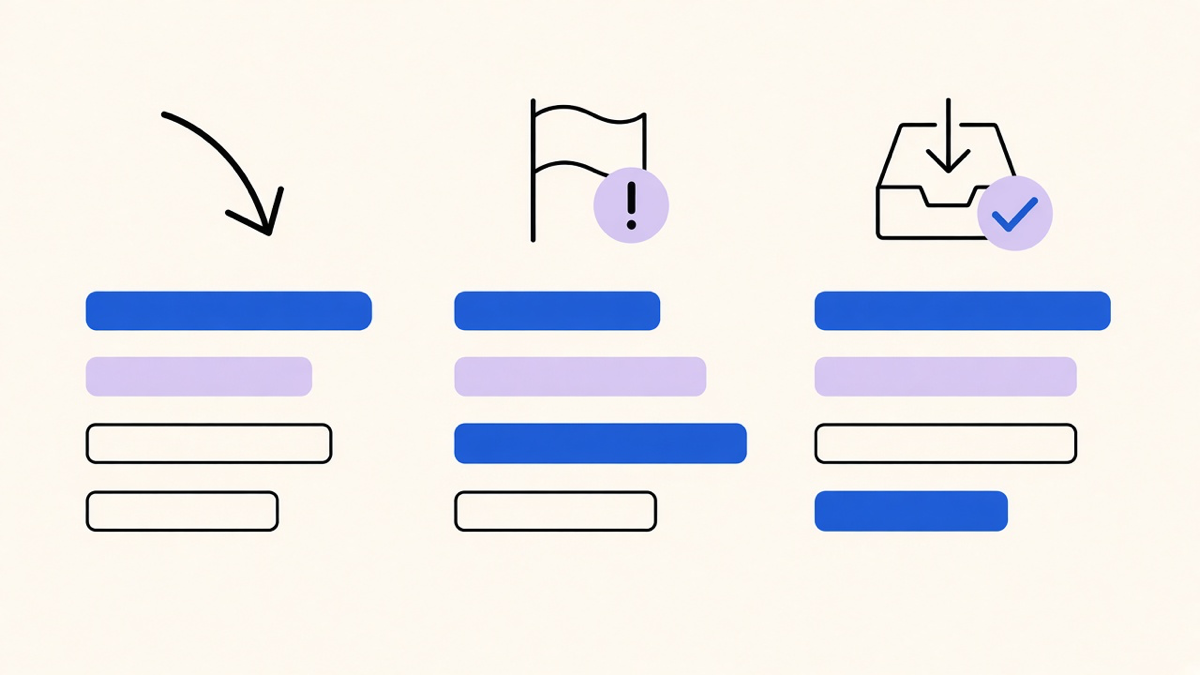
A cadence is the schedule and channel mix behind a sequence, and the mistake I see most often is running six emails in ten days with no other touchpoint. That pace reads as desperate and trains recipients to ignore you by email three. A workable sales cadence spaces emails three to four days apart, caps at four or five total touches, and mixes in a LinkedIn view or a short call attempt between emails rather than stacking everything into one channel.
Most operators do not have the time to run this by hand, which is the actual argument for automation: not that it writes better emails than you, but that it remembers to send email four on day twelve when you’re buried in something else. The tool is a scheduler and a safety net for deliverability, not a replacement for having something worth saying. Buy the piece that handles sequencing and warmup, write the message yourself, and treat any vendor claiming full autopilot outreach with the same skepticism you’d give a stranger’s cold email.