

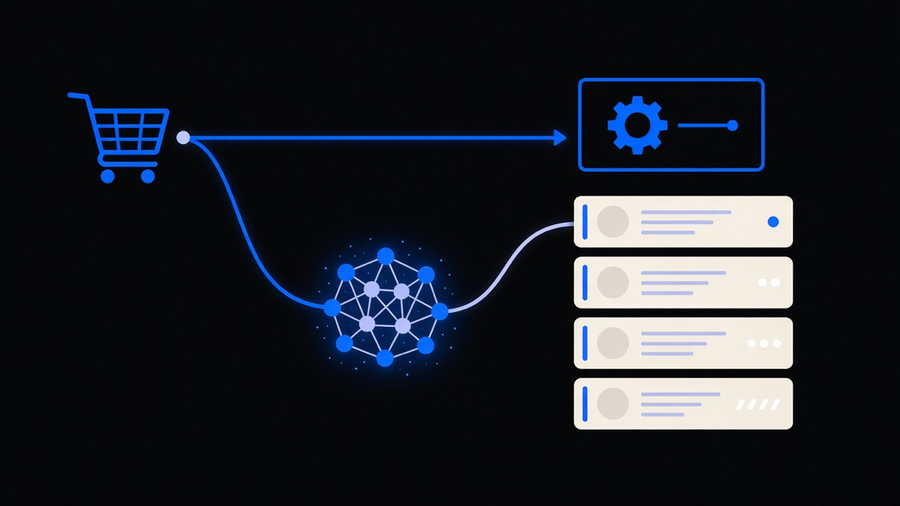
Marketing automation AI is the layer of prediction and generation sitting on top of the trigger-condition-action engine that already ran your campaigns, deciding which segment gets which message or writing the draft copy, instead of a marketer setting every rule by hand. It is not a separate product category from marketing automation. It is what happens when a rules-based platform gets a model that can rank, predict, or generate instead of only checking a fixed condition. Ninety percent of marketing professionals already use some AI tool to automate customer interactions, and eighty eight percent say it has helped personalize the customer journey across channels, according to a Statista survey cited by the Digital Marketing Institute. That adoption number is exactly why the term gets thrown around loosely: most of what people call “AI in marketing automation” is a prediction bolted onto an existing workflow, not a new autonomous system running the whole campaign.
Where Rules Stop and Prediction Starts
A rules-based workflow checks a fixed condition: cart value above fifty dollars, send the discount code. It runs the same branch every time no matter who the customer is. AI changes the condition itself into something learned from data, a model scoring how likely this specific customer is to buy without a discount at all, then routing accordingly. That is the real difference between what marketing automation is at its foundation and what the AI layer adds to it. Neither replaces the other. The trigger still has to fire and the action still has to send, the model just gets better at deciding which action.
This is also where the category gets confused with a broader one. AI automation and regular rules-based automation differ in exactly this way: a rules engine executes a decision a person already made explicitly, while an AI layer makes a new decision each time based on pattern, which is powerful and also occasionally wrong in ways a fixed rule never is. A discount code sent to the wrong segment is a bug you can find in the workflow. A model that quietly decides a loyal customer looks like a churn risk is a bug you have to go looking for, because nothing threw an error.
What the AI Layer Actually Does Inside a Digital Marketing Automation Stack
Two jobs show up constantly across vendors and case studies in digital marketing automation: predictive segmentation and lead scoring. Predictive segmentation analyzes past purchase and interaction data to guess what a customer wants next and when, instead of a marketer manually building a segment off last quarter’s report. Lead scoring ranks which prospects are worth a sales call first, based on behavior patterns instead of a rep’s gut feel.
The lead scoring case has real numbers behind it. Salesforce’s State of Sales report found that ninety eight percent of sales teams believe automated lead scoring improves lead prioritization, and U.S. Bank used Salesforce’s Einstein AI to run predictive lead scoring across its pipeline, seeing a twenty five percent increase in closed deals, a two hundred sixty percent increase in lead conversion rate, and a three hundred percent increase in marketing qualified leads. Those are the kind of numbers that get put on a sales deck, and for once they describe something a model is actually good at: ranking a large set of noisy signals faster and more consistently than a person scrolling through a CRM at the end of a long week.
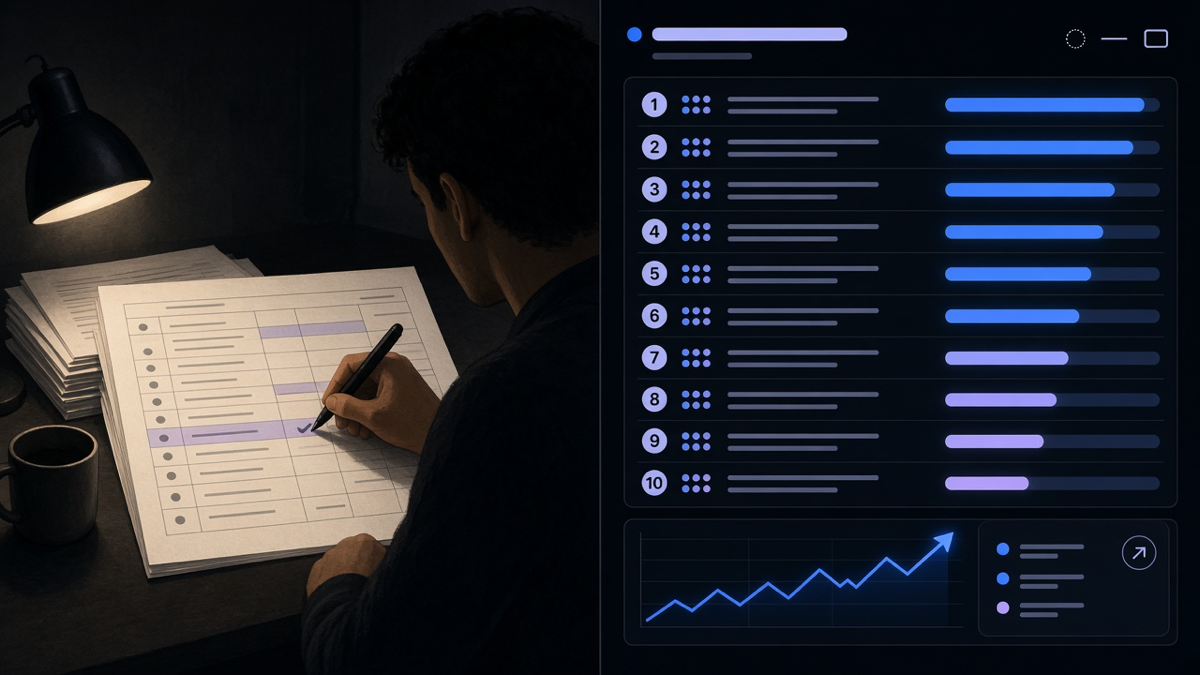
The tradeoff nobody puts on the sales deck: a scoring model trained on last year’s buyers will keep recommending last year’s buyers, even after the market shifts. It takes a person watching the output to notice that the top-ranked leads all look suspiciously similar and ask why.
Generative Content and Conversational Layers
The other visible half of marketing automation AI is generation and conversation rather than scoring. Text and image tools like the ones now bundled into most content workflows draft ad copy, product descriptions, and email variants from a prompt, which is useful for volume and mediocre at anything that needs a real point of view. Conversational AI has moved further. Gartner projects chatbots will become the primary customer service channel for roughly a quarter of businesses by 2027, and the better implementations already prove the case: Lemonade’s chatbot Maya now handles about a quarter of the insurer’s customer inquiries and has sold 1.2 million policies in the three years since launch, quoting and paying out claims in minutes instead of a phone queue.
Visual recognition is the quieter piece of this, mostly invisible to the customer. AI models tag product images for search and accessibility, match user-generated content to a brand’s catalog, and power the visual search features showing up in ecommerce, a market projected to reach 16.8 billion dollars by 2030. None of this is a new campaign channel. It is the same marketing automation workflows companies already run, with a model doing the classification step a person used to do by hand, tagging photos at 2 a.m. between other tasks nobody wanted either.
Where Human Judgment Still Has to Sign Off
Here is the opinion part: AI and large language models are genuinely powerful inside marketing automation, and they are nowhere near ready to run on autopilot. The best results still come from someone with real subject matter expertise reviewing what the model recommends, not from a platform that claims to run the whole funnel unsupervised. AI is strong at grunt work, pattern matching, and filling gaps in a workflow that plain code or a fixed rule can’t cover. It is not strong at judgment calls about which customer relationship actually matters, and any vendor pitching full autonomy is selling the demo, not the tool.
The concession, stated plainly: getting this right costs more setup time than buying the platform that promises to just work. A model has to be trained or tuned on your actual customer data, checked for bias in who it scores highly, and monitored after launch, none of which happens by clicking a subscribe button. Teams that skip this step get a system that looks automated and quietly makes worse decisions than the human process it replaced.
Governance follows from the same logic. Using AI on customer data means being transparent about what it does with that data and giving people a way to opt out, which matters more as regulators and customers both start asking the question directly instead of trusting a privacy policy nobody reads. Vendors comparing themselves on the best marketing automation companies lists all claim responsible AI practices in the fine print. The ones worth trusting can actually explain, in plain terms, what a customer’s data trains and what it doesn’t.
Choosing a platform on this basis changes the evaluation. Instead of asking which marketing automation software has the most AI features listed on the pricing page, ask which one exposes its predictions in a way a real person can check and override before a campaign sends. That single requirement filters out most of the autopilot marketing faster than any feature comparison chart, and it is the difference between a model that makes your team faster and one that makes your mistakes faster too.