


The biggest advantage of marketing automation is not speed, it is consistency: a lead who fills out a form at 11pm on a Friday gets the same follow-up sequence as one who converts on a Tuesday morning, without anyone on the team remembering to send it. That single fact drives most of the real benefits people mean when they ask what marketing automation is worth paying for: fewer dropped leads, faster follow-up, and a team that spends its hours on strategy instead of retyping the same welcome email for the fortieth time this month.
What Automation Actually Replaces
Before automation, most of what passes for a marketing operation is a person remembering to do things. Someone remembers to email the trial signups from yesterday. Someone remembers to tag the lead who downloaded the pricing PDF as sales-ready. Someone remembers to stop emailing the customer who already bought. None of that requires a platform, it requires attention, and attention is the first thing that breaks when the same person is also running ads, writing copy, and sitting in three client calls a day.
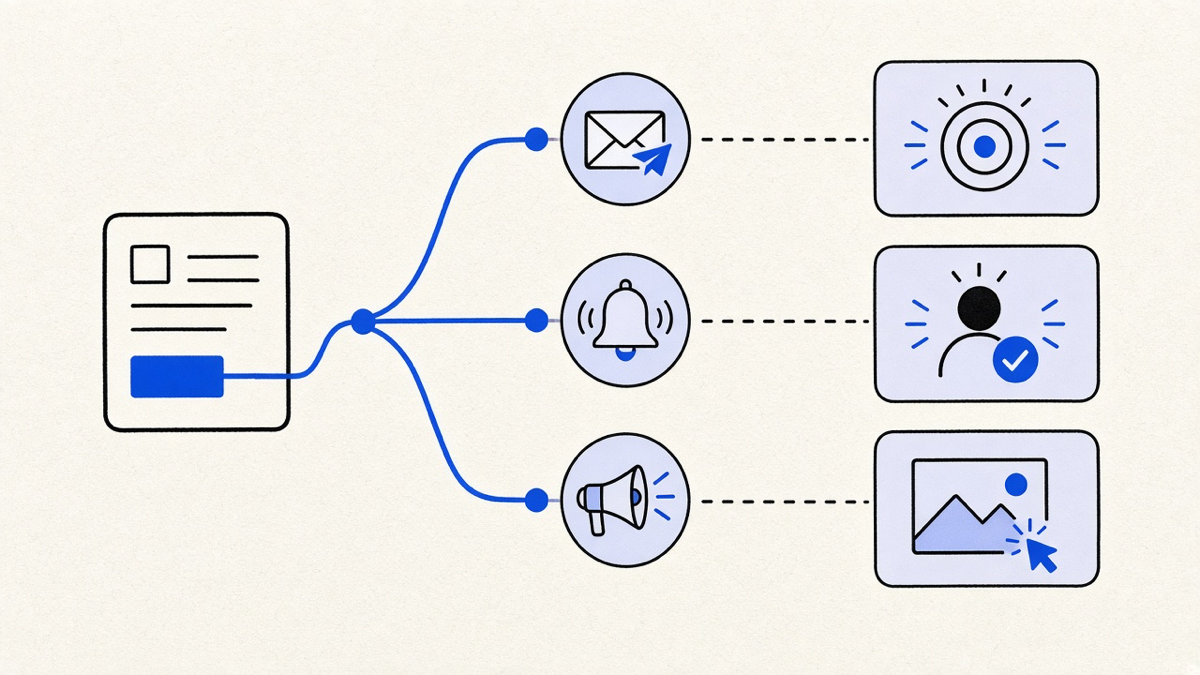
Automation does not add creativity or strategy to a marketing operation. It removes the part of the job that was never creative to begin with: the trigger-and-response work that a human was doing from memory. A new signup triggers a welcome sequence. A pricing page visit triggers a sales alert. A cart abandonment triggers a reminder three hours later, not whenever someone happens to check the dashboard. Naturally, most of the “impressive” automation demos are just this same idea dressed up with more steps in the flowchart.
We built a version of this for an HR startup that needed both inbound and outbound activity handled through the same system of triggers and responses, including hooks into third-party tools their sales team already used. The win was never that the automation was clever. It was that a lead who showed up at 2am got the same response as one who showed up during a team meeting, and nobody had to be awake for either.
The Benefits Worth Budgeting For
The specific gains teams point to when they ask why they adopted marketing automation come down to a short list, and it is worth being precise about which ones are real. Faster follow-up is real: a sequence fires the second a trigger happens, not whenever a person gets to it. Segmentation at a scale a spreadsheet cannot hold is real: automation can track behavior across hundreds of contacts and route each one down a different path based on what they actually did, not what a marketer guessed they’d do. Fewer leads falling through the cracks between marketing handing off to sales is real, because the handoff itself becomes a rule instead of a Slack message someone might miss.
What is not automatic is good judgment about which marketing automation workflows are worth building. A team that automates a bad sequence just sends bad emails faster and to more people. The platforms are good at execution. They have no opinion on whether the message itself is any good, and that is still entirely a human job.
Customizing those workflows to match how a specific business actually sells, rather than accepting whatever generic template the platform ships with, takes more work up front. It also produces results that a stock template never will, and it tends to cost less over a year than repeatedly patching a workflow that was never built around the business in the first place. That tradeoff is worth making for most teams past their first few hundred contacts, and worth skipping for anyone still figuring out who their customer is.
Why Teams Reach for It Before They Scale Sales
Marketing automation usually shows up before a company hires a bigger sales team, not after, because a weak follow-up process makes sales harder than it needs to be. Sales is genuinely harder than marketing once marketing has stopped working, and a huge share of that difficulty is just reps chasing leads who went cold because nobody followed up inside the window where they were actually interested. Automation closes that window. It does not close the gap between a bad product and a good pitch, and no platform ever will.
The honest reason automation adoption clusters around 50 to 200 employees is that this is exactly where the spreadsheet-and-memory system stops holding. Below that, a founder can track every lead personally. Above it, the volume outpaces what any one person can remember, and a business either builds rules into a system or starts losing leads it already paid to generate. That inflection point is why the “why use marketing automation” question tends to arrive with a specific number attached, not a vague sense that it might help.
When It’s Worth Standing Up, and When It’s Overkill
Most teams that buy a full marketing automation platform end up using a fraction of what they’re paying for: the welcome sequence, one or two segments, and maybe a lead score field nobody ever tunes after the first month. That is not a reason to skip automation. It is a reason to be honest about scope before signing an annual contract sized for a company three times your list. A marketing automation for small business setup should start with the two or three sequences that actually touch revenue, not a platform’s full feature list.
The platform choice matters less than most vendors want you to believe. Reviewing marketing automation software options is worth an afternoon, not a quarter, because most mid-market tools cover the same core triggers, and the real difference shows up in how well a team configures the thing it bought. If evaluating vendors feels bigger than that, a look at the best marketing automation companies still active in the space is a faster way to narrow the list than another round of sales demos.
It is worth being blunt about the other side of that tradeoff: automation is not autopilot. The platforms handle the repeatable, well-scoped parts of the job, the sends, the tagging, the routing. Anything that requires judgment about a specific customer, a strange edge case, or a message that needs to land differently for a $50 customer than a $50,000 one still needs a person paying attention. We keep automation builds on budget close to every time we scope them this way, because the scope is honest from the start: automate the trigger-and-response work, keep a human on the parts that require a decision. Teams that expect the platform to replace the decision-making end up disappointed by a tool that was never built to make decisions in the first place.