

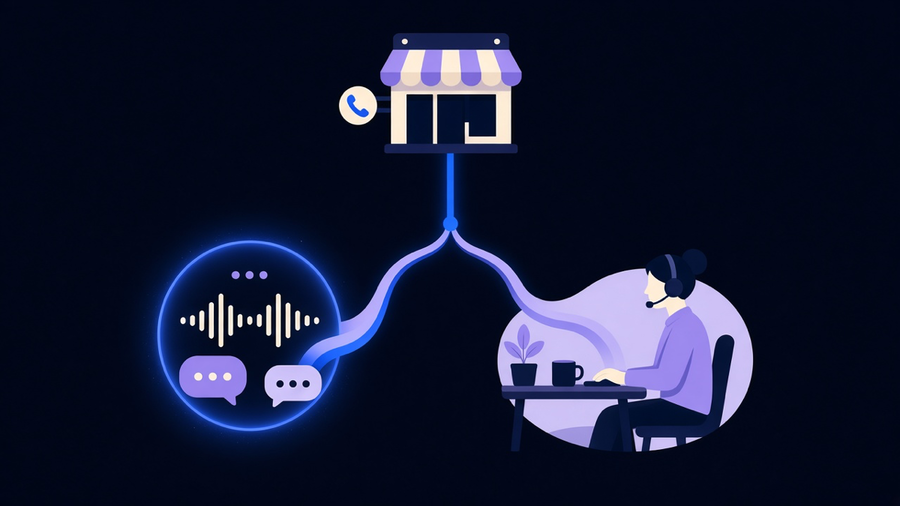
An AI phone system is software that answers a real phone call, holds a natural conversation instead of routing a caller through a menu, and takes action on the outcome: it books the appointment, logs the lead, or hands the call to a person with the context already written down. That is the whole category. It is not a fancier IVR and it is not a virtual receptionist reading a script. Industry research on small business call handling puts the stakes in plain numbers: small businesses miss 62 percent of inbound calls during normal business hours and lose an average of $126,000 a year to calls nobody picked up. That is the gap an AI phone system is built to close, and the rest of this decision is about which version of it fits your call volume and your budget.
What Counts as an AI Phone System, and What Doesn’t
A standard business phone system routes calls. A PBX, cloud or on-prem, connects extensions, rings a hunt group, and drops a caller into voicemail if nobody answers. An IVR phone system adds a menu on top of that: press 1 for sales, press 2 for support. None of that is AI. The caller is still doing the work of guessing which button gets them help, and the system still has no idea what they actually need until a human picks up.
An AI phone system replaces the menu with a conversation. The caller says what they want in plain language, the system understands intent, and it either resolves the call itself, an after-hours booking, a hours question, a simple status check, or routes it to a person with a transcript and a reason attached. That is the same job a virtual receptionist does with a human on the other end, except the AI version is on the line at 2am and does not need a lunch break covered. The distinction matters for buyers because vendors blur it constantly: a cloud phone system with a bolted-on “AI assistant” that just transcribes calls is not the same product as a voice agent built to carry the conversation. Ask what happens if a caller says something the script did not anticipate. If the honest answer is “it falls back to a menu,” you bought transcription with better branding, not an AI phone system.
What a Small Business Should Actually Require
Reviewing the current crop of vendors, the split that matters for a small business is not features, it is pricing model and what breaks under real call volume. Usage-based AI voice agents like Retell run $0.07 to $0.15 per minute, which lands 60 to 95 percent cheaper than a $50,000-a-year receptionist for a business that gets a moderate call volume. Seat-based tools that bolt AI onto an existing phone system, Aircall and CloudTalk both charge roughly $9 per user per month on top of the base plan, with a license minimum that can put the real AI cost above $140 a month before a single call comes in. A five-person practice pricing out one of the UCaaS platforms with AI enabled can land near $175 a month before add-ons, which is a reasonable number to know going in rather than discovering on the third invoice.
The features worth checking before signing anything: does the system record and transcribe every call by default, does it hand off to a human with context instead of a cold transfer, does number porting take days or take a phone call to a vendor rep who has to escalate it, and is there a real security posture, SOC 2 at minimum, HIPAA if you take medical intake calls. Most vendor pricing pages do not show the AI feature cost until you are three clicks into a signup flow, so ask directly what the per-minute or per-seat AI add-on costs before comparing base plans against each other.
Most customers configuring any of these tools end up using a fraction of what they are paying for. The fix is not picking the platform with the longest feature list. It is figuring out which three or four things your call volume actually needs, an AI answering service for after-hours coverage, warm handoff to a person, and a transcript that lands in your CRM, and buying that slice specifically instead of a seat license for a suite you will use a fifth of.
Cloud Phone System vs. AI Voice Agent: Different Layers, Different Jobs
A cloud phone system, RingCentral, Nextiva, Dialpad, is infrastructure: it moves your calls over the internet instead of a copper line, gives you extensions, hunt groups, SMS, and video in one dashboard. That is the plumbing. An AI voice agent is a layer that can sit on top of that plumbing or replace a slice of it, and the two get confused constantly because most UCaaS vendors now ship both under one brand.
The tell is where the AI actually lives. If the “AI” is a transcription and summary feature added to calls a human still answers, you have a cloud phone system with a note-taker attached, useful, but it does not answer the phone for you at midnight. If the AI can hold the actual conversation, understand what the caller wants, and take the booking or the message without a person on the line, that is a voice agent, whether it runs inside a UCaaS platform or as a standalone service layered onto a number you already own. CloudTalk’s own platform claims 99.999 percent uptime on its global calling infrastructure, which is the kind of number that matters for the phone system layer and has nothing to do with whether its AI agent can actually understand an accented caller asking to reschedule. Buy the plumbing and the conversation layer as two separate decisions, even if one vendor happens to sell both, because the reliability claims for each one are not interchangeable.
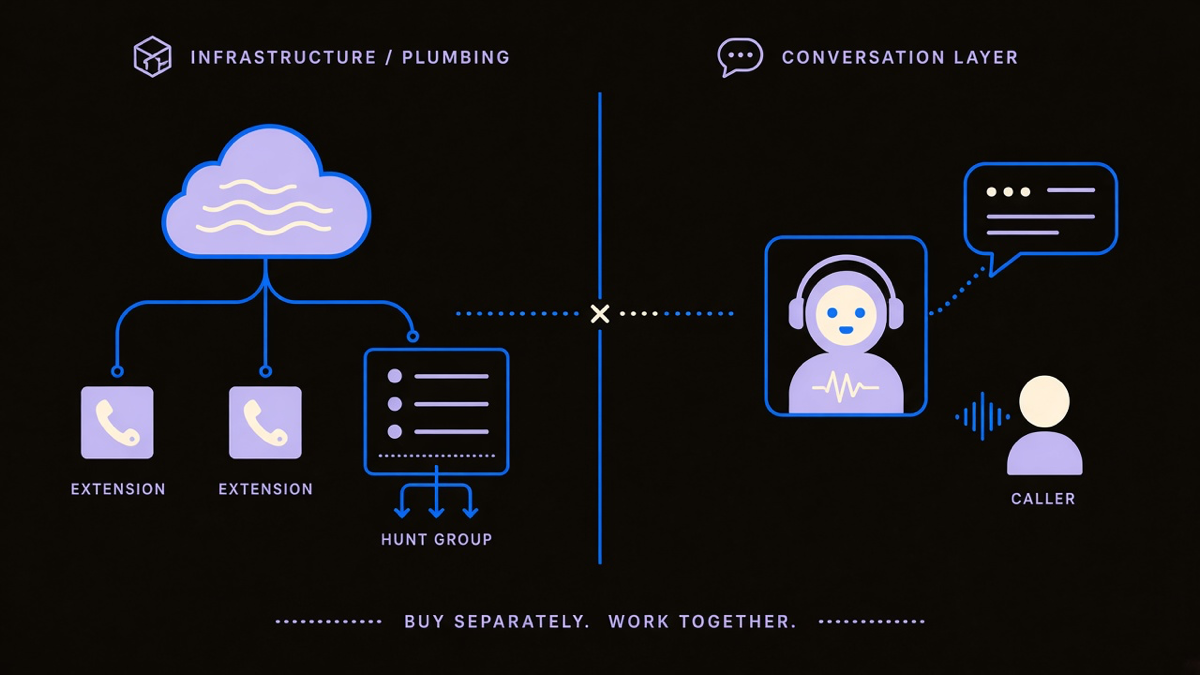
That separation is also why keeping your existing number and infrastructure and routing only a slice of calls to an AI layer is often the less risky move than replacing the whole business phone system in one migration. Point the after-hours overflow or the one line that never gets picked up at an AI voice agent first, watch what it actually handles for a few weeks, then decide whether the rest of the system needs replacing at all.
When AI Actually Pays for Itself, and When a Human Still Wins
The math on missed calls is not abstract. A service business missing five calls a week at $275 a job is leaving roughly $35,750 a year on the table, money that a flat monthly AI phone system fee well under a thousand dollars a month can recover in the first missed call it catches. That is the case where an AI call center setup or a single AI answering line earns its cost fast: high call volume, a predictable value per booked call, and hours where nobody is at the desk to answer.
Where AI still loses to a person: calls with real ambiguity, an upset customer, a complex quote that needs judgment, a negotiation. AI and language models are useful for the common patterns and the repeated grunt work of call handling, but they are nowhere near an autopilot for the calls that need actual subject matter expertise on the line. The businesses getting the best results are not replacing their front desk, they are triaging with AI so the person answering the phone only picks up the calls that actually need a person. We built exactly that setup for an operator who needed 24/7 telephony coverage: the AI handled the first touchpoint and routed anything that sounded like a complaint or a real judgment call straight to a human, with the business’s own tone built into the flow instead of a generic script.
If you are weighing whether to build this yourself, buy a point tool, or bring in someone to configure the call flow, routing logic, and CRM handoff correctly the first time, AI voice agents built around your actual call patterns beat a generic off-the-shelf script every time, because the fallback behavior for the calls the AI does not handle is where most deployments quietly fail. Get that handoff right before you worry about which vendor has the cheapest per-minute rate.