

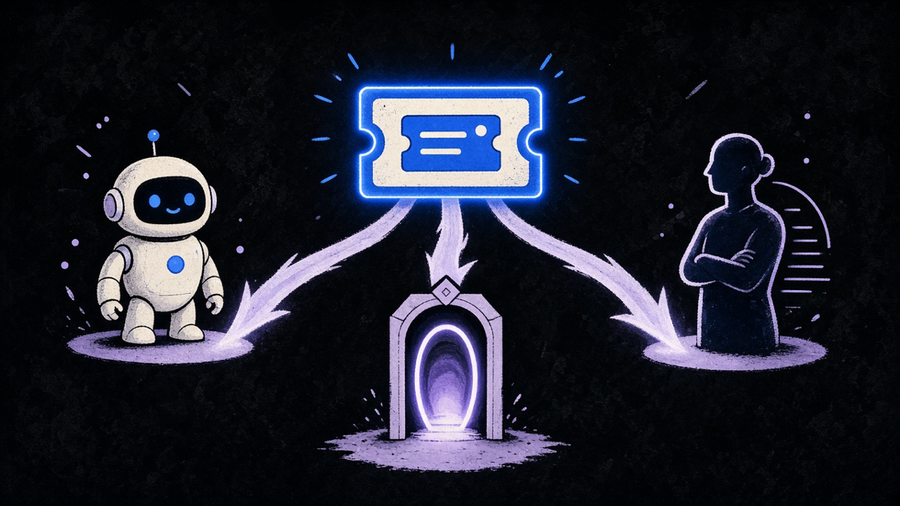
Customer service automation is software handling a support interaction without a person typing the reply: a bot resetting a password, a portal answering “where’s my order” before a ticket ever opens, an AI copilot drafting a response an agent still has to approve before it sends. IBM’s own definition draws the line at “limited or no human agent involvement,” which sounds modest until you see it working. Checkr, a background-check company, rolled out an automation layer and got 85% of customer issues resolved through self-service, with average handle time dropping 56%. That number is real. The number nobody publishes is what happened to the other 15%, and that gap is the actual planning question, not whether to automate at all.
What Customer Service Automation Actually Means (and What It Doesn’t)
Every vendor guide on this topic, IBM, Talkdesk, Zoom, hedges toward the same warning: automation should supplement agents, never fully replace the option to reach a human. Talkdesk goes further and says the quiet part about most bad rollouts: “it’s not just about throwing a chatbot on a website and calling it a day.” Their model requires mapping the full customer journey, channels, personas, and interaction points, before automating a single step of it. That’s the right order and almost nobody does it in that order, because a chatbot demo is faster to sell than a journey map.
My stance: the “always leave a human option” warning is true, but it’s also self-serving. It protects the vendor from the automation-ruined-my-CX backlash while they keep selling automation. The harder, more useful question a business has to answer isn’t philosophical, it’s operational: what percentage of tickets should stay human-routed, and which ones specifically. Get that number wrong and you either bottleneck agents with tickets a bot could close, or you bottleneck customers with a bot that can’t close what it’s holding. Customer service automation, at the level business process automation already teaches, only works when someone maps the process before buying the tool that runs it.
Where AI Customer Service Actually Helps Agents
AI customer service earns its keep as a copilot, not an autopilot, and the data supports that framing better than the marketing does. Zendesk found agents using AI copilots are 20% more likely to feel equipped to do their job well, and 75% of consumers are fine with agents using AI to help draft responses. That’s buy-in on both sides of the counter. The stronger version of the same idea shows up in AI agents that close tickets end to end for the simple, repeatable cases, phone included, the same category of work an AI receptionist for small business handles for calls that never needed a human in the first place.
The tension worth naming here isn’t chatbot skepticism, it’s deployment reality. MIT’s NANDA initiative found 95% of enterprise generative AI pilots fail to deliver measurable ROI, with the disruption concentrated in support and admin roles that quietly stop getting backfilled. Zendesk’s rosier 90%-positive-ROI figure describes its self-selected “Trendsetter” segment, the aggressive early adopters, not the median company running a stalled pilot. Both numbers are true. They’re describing different populations. My take: if your rollout looks like the median, budget for the pilot stalling before it produces anything, and don’t greenlight a second wave of AI tooling until the first one has a number attached to it.
Chatbots That Don’t Suck: What Chatbot Customer Service Gets Right and Wrong
Chatbot customer service has an adoption paradox built into its own research. Tidio found 82% of customers say they’d use a chatbot, and in the same survey, 60% of Gen Z, the generation least attached to phone support, still say chatting with a rep is stressful. Yet the top three things customers want from a bot are 24/7 availability, a fast reply, and the ability to reach a human on request. That third item ranks as a top-three expectation, not a fallback nobody uses.
The failure mode is specific, not vague. Fifty-five percent of businesses say their chatbot did exactly what they set out to do; the other 45% didn’t get the result they expected, which is close to a coin flip dressed up as a success story in most case studies. The bots that work resolve a narrow set of named intents fast and hand off cleanly. The bots that get complained about are the ones built to seem like a full-scope agent, then block the human escape hatch the moment they can’t resolve something. Building the second kind because it demos better than the first is the most common, and most avoidable, mistake in this category.
Customer Self-Service: Portals Customers Use More Than Companies Build
Customer self-service has a supply gap, not a demand gap. Sixty-nine percent of consumers try to solve a problem on their own before contacting anyone, and knowledge bases beat every other self-service channel in Forrester’s research on customer preference. But 82-84% of customers use knowledge bases and portals while only 64-66% of companies offer well-built ones, per stats Salesforce and Zendesk both report. Nearly a third of the frustration customers report isn’t a bad answer, it’s an answer that exists somewhere on the site and is hard to find.
I’d call that an execution failure, not a channel-preference failure, and it changes what gets built first. A company that treats self-service as a deflection tactic bolted on after launch builds a search box nobody trusts. A company that treats it as the first channel, the one most customers already default to, builds the thing people use before they ever open a ticket. The same logic extends past retail: a customer self service portal for a medical practice carries the same 15-point gap between what patients want to look up themselves and what the practice publishes.
Helpdesk Automation: Fixing the Internal Mess Before the Customer-Facing One
Helpdesk automation gets sold as one category when it’s two different products solving two different failure modes. Zendesk’s own comparison of sixteen platforms splits vendors by job: ServiceNow and ManageEngine target IT teams, while Gorgias, Tidio, and Freshdesk target customer-facing support. An IT ticket is “my laptop won’t authenticate.” A customer ticket is “where’s my order.” ServiceNow’s acquisition of Moveworks, a pure-play internal-IT automation vendor, is the market voting with its checkbook that one platform doesn’t do both well, no matter how the sales deck frames it.
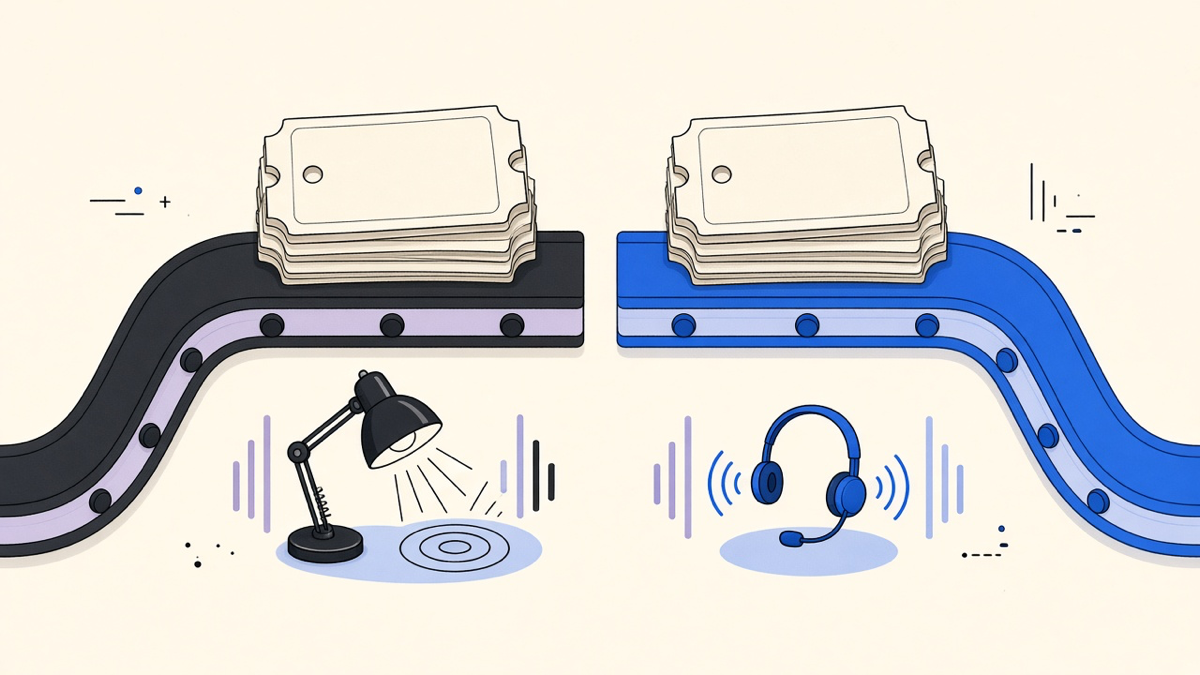
That distinction matters because most of the automation wins that stick happen on the internal side first: ticket routing by criteria instead of by whoever’s inbox is emptiest, automated reporting on volume and response time instead of a manager eyeballing a dashboard once a week. We build this as helpdesk automation wired into whatever ticketing system a team already runs, and the pattern holds every time: fix the internal routing mess before automating anything a customer sees, because a bot handing off to a disorganized internal queue moves the bottleneck one step downstream instead of closing it. Customer service automation that skips this step looks impressive in a demo and falls apart at the first ticket that needs two departments to touch it before it closes.